
The Meaning of Precision Tubes
Precision tubes are a broad term for high-quality steel tubes which have been manufactured with strict dimensional accuracy and superior surface finish. They are typically made from carbon or alloy steel through advanced production processes such as cold drawing or seamless tube manufacturing, ensuring uniformity in wall thickness, diameter, and straightness.
Precision Tube Features and Applications
Precision tubes are widely used in industries requiring high-performance materials, including automotive, aerospace, medical, and industrial machinery. Their precision engineering allows for the creation of lightweight yet strong components, improving efficiency and durability in various applications.
Key benefits of precision tubes include enhanced strength, reduced material waste, and excellent formability, making them a cost-effective and reliable solution for demanding engineering and structural applications.
Precision tubes are widely used in industries requiring high-performance materials, including automotive, aerospace, medical, and industrial machinery. Their precision engineering allows for the creation of lightweight yet strong components, improving efficiency and durability in various applications.
Key benefits of precision tubes include enhanced strength, reduced material waste, and excellent formability, making them a cost-effective and reliable solution for demanding engineering and structural applications.
Features of Precision Tubes
Precision tubes are designed with a smaller outer diameter, making them ideal for applications that require compact yet high-strength components. Their high dimensional accuracy and precision ensure uniformity in diameter, wall thickness, and straightness, allowing for a perfect fit in complex assemblies.
With an excellent surface quality achieved through a cold-drawn finish, precision tubes offer smooth internal and external surfaces, reducing friction and minimising the need for additional machining. Additionally, their cross-sectional area is more complex compared to standard steel pipes, enabling enhanced structural performance and versatility in specialised applications.
These tubes deliver superior performance due to their high-density metal composition, resulting in greater strength, durability, and resistance to wear and fatigue. Combined with customisable shapes, excellent weldability, and corrosion resistance, precision tubes provide a reliable, high-performance solution across various industries.
Applications of Precision Tubes
Precision tubes are essential across various industries due to their strength, accuracy, and versatility. In the automotive and aerospace sectors, they are used in chassis components, shock absorbers, steering systems, hydraulic frameworks, and engine parts, benefiting from their lightweight yet high-strength properties. Medical equipment relies on them for surgical instruments, hospital furniture, and diagnostic devices, ensuring precision and hygiene.
In industrial machinery, precision tubes support hydraulic and pneumatic cylinders, conveyor systems, and mechanical structures. The construction and energy sectors use them for scaffolding, handrails, boilers, heat exchangers, and pipelines, ensuring durability in demanding environments.
Additionally, they play a key role in agriculture, where they are used in irrigation systems, machinery frames, and equipment for planting and harvesting, offering durability in harsh outdoor conditions. Precision tubes are also found in furniture and architecture, enhancing design and functionality, and in defense and firearms, where high precision and strength are crucial for military applications.
Comparing Different Types of Precision Tubes: Why Carbon Steel Stands Out
Precision tubes are manufactured using various types of steel, each offering unique advantages for different applications. The most commonly used materials include precision steel, carbon steel, alloy steel, and stainless steel.
While all have their place in the industry, carbon steel precision tubes provide the best balance of strength, cost-effectiveness, and versatility, making them the preferred choice for many applications. Below is a comparison of these materials, highlighting why carbon steel is often the best option.
Carbon Steel Tubes
Made primarily from iron and carbon, these tubes are strong yet cost-effective, making them a popular choice for structural and industrial applications.
Why It Stands Out: Compared to alloy and stainless steel, carbon steel is more cost-effective, making it the most practical choice for large-scale industrial use. While it doesn’t have the same level of corrosion resistance as stainless steel, protective coatings and treatments can significantly enhance its durability.
Key Benefits:
High Strength-to-Weight Ratio – Offers robust structural support without excessive weight.
Excellent Machinability & Weldability – Easier to cut, shape, and join than alloy or stainless steel.
Cost-Effective – Lower material and production costs compared to stainless and alloy steel.
Durable & Reliable – With proper coatings, carbon steel tubes can withstand tough environments.
Best Applications: Widely used in construction, infrastructure, pipelines, shipbuilding, automotive chassis, and industrial machinery, where strength and affordability are top priorities.
Alloy Steel Tubes
Alloy Steel Tubes contain additional elements such as chromium, molybdenum, or nickel to enhance properties like heat and wear resistance. The type of elements selected to create alloy steel tubes depends on the future application of the precision tube.
Comparison to Carbon Steel: While alloy steel offers greater resistance to extreme temperatures and pressures, it comes at a higher cost and is often unnecessary for standard industrial applications. Carbon steel, with the right treatments, can achieve similar durability at a lower price point.
Best Applications: Used in high-performance automotive parts, aerospace components, pressure vessels, ships, construction equipment and power generation equipment where extreme conditions demand superior strength.
Stainless Steel Tubes
Stainless steel tubes have high chromium content which provides excellent corrosion resistance and durability, making stainless steel suitable for harsh environments.
Comparison to Carbon Steel: While stainless steel is corrosion-resistant, it can come at an increased cost and it is not always necessary. In many applications, carbon steel coated with anti-corrosion treatments can provide similar longevity at a fraction of the cost.
Best Applications: Primarily used in medical devices, food processing, marine engineering, and architectural structures, where hygiene and resistance to chemicals are essential.
The Difference Between Precision Tubes and Seamless Tubes
Precision Tubes
Precision tubes are processed by cold drawing or cold rolling. They provide high-dimensional accuracy and smooth inner and outer surfaces. As there is no oxide film on the inner and outer surfaces of the steel pipes after heat treatment, there are no cracks in the expansion and flattening of steel pipes. Precision steel tubes can also withstand high pressure without any deformation caused and can be used in complex mechanical processes.
Seamless Tubes
A Seamless tube, also known as a seamless pipe, is a tube with no welding seam. This type of tube is made with only one piece of metal and is connected to another tube via threads at the end of each pipe that help form connections with other tubes. They can be made from alloys or metals such as stainless steel, carbon and more.
The manufacturing process for seamless tubes can vary, from hot-rolled to cold-rolled and cold-pressed which ultimately produces pipes with different characteristics and functions.
Much like precision tubes, seamless tubes are commonly used in various industries such as automotive, oil and gas, power generation, and construction. This is due to their excellent properties such as a high-strength, durability and corrosion-resistance. However, they can withstand immense pressures and their strength is much higher in comparison to welded metal tubes.
Although precision tubes can be welded, they can be custom-manufactured to become seamless depending on the alloy you require.
The main features of seamless pipes are:
- No welded seams
- Can withstand greater pressure
- They can be rough as-cast or cold drawn
- Strict tolerances
- Roughness of inner hole and outer wall size
Our Services
At Elite Tube, we supply and process high-quality precision steel tubes tailored to a wide range of industries. Our services include.
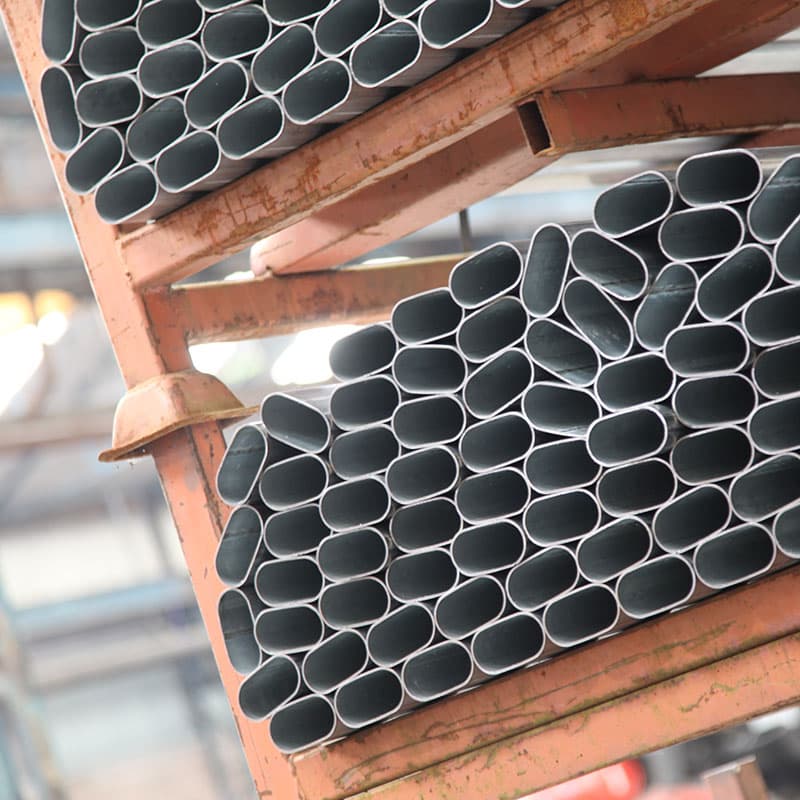
Extensive Tube Range: Available in round, square, rectangular, flat-sided oval, elliptical, and custom sections, including mild steel, ERW, and specialised tubes.
Cut-to-Length Service: Accurate cutting to ±0.5mm, ready for immediate use.
Expert Support: Technical advice to help you choose the right material for your application.
Industry Focus: Serving sectors such as automotive, agriculture, retail, leisure, and more.
Certified Quality: All products meet BS EN 10305-3/5, ISO 9001, and ISO 14001 standards.
Elite Tube is your trusted partner for reliable, precision-engineered tube solutions.
Precision Tube Standards & Tolerances
At Elite Tube, we are committed to maintaining the highest standards in precision tube manufacturing. We adhere to British Standards BS EN 10305-3 and BS EN 10305-5, the latest European regulations governing the production and delivery of welded, cold-sized precision tubes. Our steel is also supplied in compliance with BS EN 10305-3/5 and ISO 9001, ensuring industry-leading quality and reliability.
Our tight cutting tolerances, working within ±0.5mm as a minimum, guarantee precision throughout our daily operations. In addition, our expert advisory service ensures that the right materials are selected for your application, giving you full confidence in Elite Tube as a trusted extension of your business.
We also adhere to ISO 9001, an internationally recognised quality management system, and ISO 14001, which guides our environmental management practices to uphold our environmental responsibilities. Beyond production, our high-quality standards extend to customer service, where transparency and communication ensure you are always informed about your tube supply and fabrication, providing complete satisfaction.