
Deciding which steel tube is right for your project will be dependent on the application. There are many important features to consider from material selection to shapes, and steel tube types. While some projects may require materials that can withstand high pressure, other applications may require a particular aesthetic.
Types of Steel Tube
Electric Resistance Welded (ERW)
ERW tube is an electric welded tube which is made from a rolling coil (or strip) that is then welded longitudinally across its length. During this process, the tube's steel edges are melted to form a consistent cylindrical shape.
Applications: ERW tubes are known for their high strength and durability, making them suitable for a wide range of applications like automobiles, medical supplies, furniture, shop fitting & display, racking and storage solutions, agriculture, and many more.
Benefits: ERW tubes are versatile, cost-effective and durable solutions that are used in a wide variety of sectors.
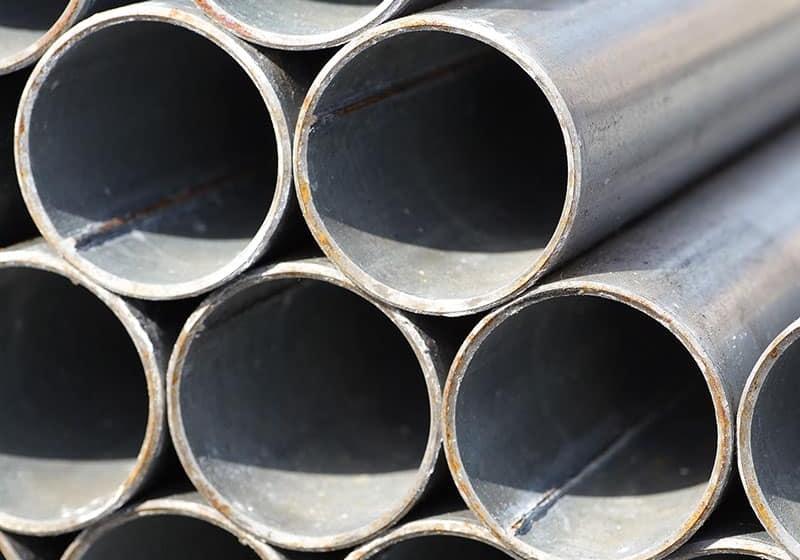
High Frequency Welded (HFW) Tubes
HFW tubes are made from carbon or alloy steel strips formed into a tube and welded using high frequency electric resistance welding. The strip edges are heated and pressed together to create a strong, continuous weld without filler material, followed by heat treatment, sizing and cutting to length.
Applications: HFW tubes are used in structural works, automotive parts, furniture, fencing and oil and gas pipelines, especially where strength, precision and pressure resistance are required.
Benefits: They offer consistent quality, accurate dimensions and uniform wall thickness. HFW tubes are cost-effective, suitable for large-scale production, and provide strong, reliable performance in demanding applications.
Hydraulic Steel Tubes
Hydraulic steel tubes are designed so that fluid can move within and among hydraulic components, fittings, valves, flanges, and other tools. They are integral to many sectors as they are used to power a wide range of machinery and equipment.
Applications: Hydraulic steel tubes are required in applications that require fluid to be transmitted under pressure. Hydraulic tubes are used in the automotive industry, construction and heavy machinery, aerospace, manufacturing and production lines.
Benefits: Hydraulic steel tubes are manufactured to precise tolerances with smooth internal surfaces, ensuring efficient fluid flow and reliable sealing in high-pressure systems. They offer high strength, resistance to vibration and stress, and are easy to form, bend and weld for flexible installation.
Drawn Over Mandrel (DOM)
A DOM tube is made from carbon, alloy and a cold-drawn electric resistance welded steel tube that has had all of the flash removed prior to cold-drawing. The drawn over mandrel method starts with an electrical resistance welded tube which is cold-drawn through a die and over a mandrel. The die determines the outside diameter and the mandrel defines the inside diameter. Once the shaping process is complete, the tubing is tested multiple times to ensure it meets industry standards and then it is cut to length.
Applications: DOM tubing is used in the automotive industry for drive shafts, axle tubes, roll cages, suspension components and more. They are also used for scaffolding, support columns, handrails and other construction applications. DOM tubes are also popular in mechanical engineering, agriculture, sports equipment, and fluid and air systems.
Benefits: DOM offers a cost effective solution to improve yield and tensile strengths. DOM tubes provide other crucial benefits such as being available in an infinite range of sizes and wall thickness, superior surface conditions (with all traces of weld seam removed) and minimal additional processing.
Hot Finished Seamless (HFS) Tubes
Hot Finished Seamless (HFS) Tube is produced by piercing solid billets and then resizing them using sizing rolls to achieve the desired dimensions. This process makes HFS tubing a reliable and cost-effective option for applications where tight dimensional tolerances and a smooth surface finish are not critical.
Applications: HFS tubes are preferred in environments requiring strength and the ability to uphold integrity under challenging conditions. They suit a diverse range of applications from hydraulic cylinders and mechanical parts to structural components and boilers. HFS tubes are versatile and can be used across many different industries from oil and gas to automotive and construction.
Benefits: Key benefits of using HFS tubes for your project include strength, durability, and high tolerance due to close dimensional tolerances and better surface finishing. While being versatile in a wide range of environments, HFS tubes are also cost-effective. Despite the initial production costs being higher in comparison to other tubes, HFS tubes provide a better return on investment as they are highly durable.
Cold Drawn Seamless (CDS)
CDS tubes are produced from hot solid round billets that have been pierced to create a tube. These tubes are drawn through dies, until they reach their final size.
Applications: CDS tubes are suitable for automotive, hydraulic and pneumatic systems, mechanical engineering, energy sector, aerospace, medical, and construction.
Benefits: CDS tubes provide excellent mechanical properties and dimensional accuracy alongside high strength, tight tolerances, and fatigue resistance. Their smooth internal surfaces make them ideal for hydraulic and pneumatic systems.
Different Types of Alloys for Steel Tubes
Carbon Steel
Carbon Steel is an alloy steel that typically contains 0.5%-2% of carbon. Properties of carbon steel like strength, hardness, and ductility can all be affected by how much carbon is added to the steel tube. As a result, three types of carbon steel are created: low carbon steel, medium carbon steel and high carbon steel.
Recognised as one of the most popular steel tube materials, carbon steel is used for a wide variety of applications in the following sectors such as construction, oil and gas, automotive, marine, mechanical engineering and manufacturing.
Alloy Steel
Compared to carbon steel, alloy steel contains additional alloying elements to create the desired characteristics. Typically, elements are used to significantly improve heat resistance, wear resistance, tensile and yield strength and corrosion resistance. These tubes are widely used in demanding applications such as power plants, oil & gas, automotive, boilers, aerospace, and heavy machinery.
Stainless Steel
Stainless steel tubes are made from a blend of iron, chromium, and other alloying elements such as nickel and molybdenum, which give them excellent resistance to corrosion and high temperatures. They are widely used in industries such as construction, automotive, food processing, pharmaceuticals and oil and gas. Their main benefits include durability, ease of maintenance, hygienic properties and the ability to withstand extreme conditions, making them a reliable choice for both structural and fluid handling applications.
Galvanised Steel
Galvanised steel tubes are made from carbon steel that has been coated with a layer of zinc to protect against rust and corrosion. This makes them ideal for applications such as fencing, handrails, outdoor structures, and water or ventilation systems. The zinc coating provides long-lasting protection in harsh environments, while the steel core offers strength and durability. Galvanised steel is a cost-effective and low-maintenance option for both structural and functional use.
Mild Steel
Mild steel tubes are made from low carbon steel, offering good strength, ductility and ease of fabrication. They are widely used in construction, engineering, automotive frames and general fabrication work. Unlike galvanised steel, mild steel does not have a protective zinc coating, making it more prone to rust if not painted or treated. However, it is more versatile for welding and machining, and often preferred for indoor or non-corrosive environments.
Steel Tube Sizing
Diameter, wall thickness and length are all important dimensional requirements that should be considered when selecting steel tubs for your project. These requirements depend on the physical and mechanical demands of a project including key areas like load-bearing capacity, space constraints and fitting.
Another important factor to consider when selecting the right steel tube size is whether or not your tube size is compliant with industry standards. We are compliant to the British Standards under BS EN 10305-3 and 10305-5 which includes the latest European standards for manufacturing and delivery conditions of welded cold-sized tubes. We also adhere to the following standards:
Quality Standard ISO09001 - an international standard for a quality management system
Environmental Standard ISO 14001
Find out more about our tube standards, grades and specifications.
Steel Tube Shapes
The correct shape of a steel tube will depend on the nature of the load, the design and the intended purpose. Different shapes offer different structural advantages. Rectangular tubes, for example, provide excellent strength when laid flat, making them ideal for use in beams, frames and structural supports. Round tubes are better suited for applications involving pressure or rotation, while square tubes are often chosen for their ease of connection and clean appearance in architectural designs.
At Elite Tube, we offer the following steel tube sections:
Oval elliptical steel tubes
A smooth and gentle shape for unique applications.
Flat sided oval steel tubes
A sleek rounded tube with a flat-sided profile, ideal for racking, shop fitting, and automotive applications.
Rectangular steel tubes
Rectangular steel tubes are manufactured to tight tolerances and industry standards, making them highly durable and suitable for multiple industries.
Square steel tubes
Square tubes are ideal for a range of sectors that require high-quality mild steel tubing.
Round steel tubes
We offer round ERW, contiflo, and Pre-galvanised steel tubes for industries that need a straightforward solution for demanding applications.